The Most Powerful Tool At Our Disposal

This is the latest installment of the “lessons learned from failure” series. You’ll find links to related posts at the bottom of this one.

******

Fifteen years ago I had a story I wanted to tell the world about my life.

It was the story of how moved from Texas to the Pacific Northwest to work with a small, struggling church. After a few years, the church doubled in size and then eventually became one of the largest churches in the region and then the country. It was going to be a tremendous story about all the amazing things I saw God do as the church grew.

But before I could tell it, I had to live it. So it never got told.

Eight years ago I had another story I planned to tell someday.

It was the story of how I moved from the Pacific Northwest to work with another struggling church in Oklahoma. The church was recovering from a season of great difficulty and hoping to recapture its former glory. Under my leadership the church experienced a time of great renewal and growth and became the definitive case study for turnaround churches. I dreamed of telling this inspirational story across the country.

But before I could tell it, I had to live it. It is another untold story.

Two-and-a-half years ago I had a story I wanted to tell.

It was the story of how I moved from Oklahoma to plant a church in Texas. It would be the kind of church where people who hate church would feel safe to come and hear the story of Jesus and explore what it means to follow him. It might not be the largest church in the city, but it would have a distinct ministry to those who were interested in Jesus but not church as they knew it. I would get to tell the story of how God blessed our experimental community and used us to break new ground in connecting with those who are far from God. It was going to be a great story and I was going to tell it well.

Again, I couldn’t really tell it until I lived it. So it remains untold.

Regret is the gap between the stories we once dreamed of telling about out lives and the stories we’re actually qualified to tell.

As we get older, we’re forced to come to terms with this gap. When we were young(er) we knew the stories we wanted to tell someday. We envisioned stories about how much we accomplished, how much money we made, how happy our marriage was, and how successful our kids turned out to be.

For the young, just launching into life, the greatest power they have is the stories they plan to tell someday. Wrapped in these stories are hopes, dreams, and ambitions. It’s fun to be around younger people telling stories about themselves set in the future. But sometimes it’s hard to resist jumping in and telling them they may end up with a different story to tell someday.

As the years pass, and as the gap of regret widens, we face a couple of perilous temptations.

One is to get caught up in the past and fixate on how the stories we thought we were going to tell never panned out. Where we once spent our time thinking about our future story, we can easily switch directions and spend our time living in the past and lamenting the passage of time, the making of mistakes, and the cruel twists of fate that rendered us ineligible to tell our dream stories. This is a deadly place to be because those who live in the past have no power to move forward because they’ve cut themselves off from their greatest source energy: the hope of a better future.

The other temptation is to keep conjuring up new stories we want to tell about our lives someday that have no connection to the stories we’ve already lived. Many of these stories are only one fairy-god-mother short of making it into a storybook. Those who live only in the future lack the maturity to move forward because they cut themselves off from their greatest source of wisdom—a disappointing past.

What we need is a vantage point from which we can turn the eye of wisdom to the past and the eye of hope toward the future. This can only be done when we root ourselves in the present moment. In the present, we have access to both the maturity from our past and the energy from our future. Together, they keep us moving forward with realistic hope.

The most powerful tool we have in the present is our life story. Not the story we thought we would live to tell back when were twenty-one or the story we still hope to tell when we’re eighty-one, but the story we’ve lived to tell up until this point.

I still have a story I want to tell with my life. One that I hope I can tell twenty years from now, but I understand something now that I didn’t fifteen years ago. Whatever story I tell in twenty years isn’t going to drop out of the sky as a stand alone narrative. The story I tell someday can only grow out of the story I’ve already lived. The story I will tell someday isn’t set in the future, it’s happening right now. I’m making it up as I go along. As important as it is to have a hopeful story set in the future, the most powerful tool I have at my disposal is the story I’m living right now.

I have a story to tell and I’m sticking to it, because it’s the only story I’ve got. I’m qualified to tell it, because I’m living it.

What story have your mistakes, disappointments, and failures qualified you to tell?

Please don’t ever be afraid to tell it.

Have You Hugged a Zombie Today?

Last fall, because of the Twitter buzz among my friends, I started watching The Walking Dead on AMC. This was a completely new genre for me. I can count on both hands the number of horror films I’ve watched from beginning to end. When I was kid I went to the movies with a friend and his mom took us to see Poltergeist. It messed me up for days. I was afraid of my dog, afraid of my sister’s dolls, and afraid to look in the mirror at night. It was an early inoculation against scary movies.

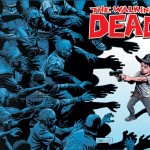
The first episode of The Walking Dead grabbed me by the throat and took a big ole bite out of my attention span. I developed a strange fascination with Zombies. I read the first volume of the comic book graphic novel (ahem) upon which the show is based. I started listening to a dramatized podcast of another Zombie story. I walked around the house practicing my Zombie stagger.

I started thinking about why Zombies are so popular. Why can’t we look away from stories about the undead who come either to feast on or infect us? Since I’m not a lifelong Zombie aficionado, I don’t have a working knowledge of the Zombie mythology. I haven’t read any commentary on or critical analysis of the Zombie genre. I’m trying to figure all of this out for myself.

I’ve come to the conclusion that Zombie stories are an enduring part of our culture because they teach us life lessons that remain stubbornly hidden until backlit by the macabre.

Here are a few that come to mind:

1. Zombies give us perspective. They remind us that no matter how bad we think things are in the world today, they could always be much, much, much worse. Bummed that you just lost your job? Marriage failing? Dealing with rebellious kids? Lose all of your money in the stock market? It could be worse, your neighborhood could be overrun by flesh-eating Zombies. The Democrats suddenly don’t seem to be quite as menacing a presence do they? Zombies teach us to be thankful for the imperfect world we have, which maybe isn’t so bad after all. (I don’t think it’s a coincidence that my Zombie fascination began at about the same time my professional world was falling apart last year.)

2. Zombies confirm our suspicion that most of the living aren’t really alive. We’re surrounding by the walking dead, staggering through lives of quiet desperation, devoid of purpose and passion. Not alive, not dead, always hungry, never satisfied. We are in constant danger of being consumed and converted by the meandering horde of those infected with the status quo. The survivors’ struggle against the zombies is the battle of humanity against meaninglessness writ large.

3. Zombies are a modern embodiment of divine judgement. Zombie stories are magnifications of the plagues that come around and weed out the human population every few centuries. Whether God causes the plague or merely allows it to come upon the earth is beside the point. The plagues are a form of judgement. By grace, God always preserves a remnant, the survivors who learn from humanity’s mistakes and carry on after the carnage has passed. Zombies teach us to be careful, because God is watching. (Yes, you read that right. The story of Noah’s Ark is a precursor to Zombies.)

4. Zombies force us to take responsibility for our lives instead of waiting for someone else to show up and solve our problems. Zombie stories begin with the survivors assuming that help is on the way. Eventually they conclude there is no one “out there” coming to the rescue. They’ll have to stick together, work together, and learn to trust each other if they hope to make it. When the Zombies are closing in around your house, don’t expect your president, the military, or FEMA to come walking through the door. The best you can hope for is that your next door neighbor will bring an extra shotgun to the party.

5. Zombies force us to embrace our existential hopelessness and then decide how we will respond. I recently bought my boys an X-Box, along with the Call of Duty: Black Ops game. It has a Zombie mode that is fun to play during the day. Here’s the problem with Zombies: they never stop coming. Kill one and another takes its place. You can’t get ahead. You can’t win. You either shoot enough to give you time to run away or you get eaten. Zombie stories chastise our faith in human progress and ingenuity. They overwhelm our firepower, technology, and strategy. What makes a Zombie story interesting is what the survivors do AFTER they realize they have no hope of overcoming the Zombies. Many give up and die, but a few defy their hopelessness and press on. Why? Because they have no other choice. It’s only when we come to the end of our hope that we discover a deeper kind of faith, born of desperation, that energizes us to keep on walking even though we haven’t a clue where the path is leading.

Could it be that Zombie stories teach us the secret to life? That no matter how bad things are, no matter how hopeless our situation, no matter how hard it is to imagine a better day, the only way to survive is to find a few others we can trust and keep moving forward together.

Zombies are popular for a reason.

They have much to teach us.

Have you hugged one lately?

Pancho and Lefty

Another great ballad.

I Love Ballads

When I finally got on Spotify this week, the first song I looked up was El Paso by Marty Robbins. When I was a kid I had a cassette of his Cowboy ballads. I wore it out. I had just about every song memorized. I can still sing most of El Paso, but not without several unfortunate key changes throughout.

What is your favorite Cowboy ballad?

An Exercise in Absurdity

I recently did a writing exercise recommended by Natalie Goldberg in Writing Down the Bones. I sat in Starbucks with an open newspaper and started combining random ideas and images to form the most absurd vignettes possible. Here are a few of my favorites.

*****

A carpenter built a home out of cinnamon sticks and apples. Just after completion, the house was set ablaze by an arsonist. The neighborhood smells much better now. The carpenter has contracts to build other houses across the city. His next will will be of peaches and vanilla beans. Then he’ll do one of strawberry and chocolate chips. He has changed the name of his company to “House Candles.”

*****

A large man bounced out of Starbucks like a rubber ball. He rolled into the street and was hit by a car. He was flattened and lengthened into a speed bump that is three inches too tall. His mom keeps telling him he should stop letting people run over him. But he feels guilty for being in their way.

*****

A woman let the hair on her legs grow so long she was able to braid it and tie the braids from each leg together. She walks funny now, but no one notices because she also wears an eye patch and a viking hat. If you stare too long she’ll threaten to strangle you with her hairy leg braids.

*****
I’m not sure what is to be gained from such an exercise other than multiple referrals to therapists, but it was fun. Give it a try. If you come up with something you want to share, post it in the comments.