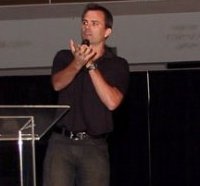
Since I used to be one, I thought I would offer some unsolicited advice to young preachers.
Stop writing sermons for people who aren’t in the room.
For the first few years after seminary, preachers write sermons to please their former professors. The more successful they are in doing this, the less effective they are as preachers. There is a big difference between preaching to seminary professors and to people who are proud of themselves for making it to the worship gathering 2 out of 4 Sundays.
When I first started preaching I wanted to get everything right. I wanted to make sure I handled the text well. I wanted to make sure I wasn’t saying something the text was never intended to say in the first place. I wanted to make sure I didn’t make a critical faux pas that would make my professors roll their eyes.
I once preached an entire series on Ecclesiastes referring to the writer of that book as Qoheleth. Talk about meaningless! People were leaving church more concerned with who in the heck Qoheleth was, instead of actually paying attention to what he had to say. For the record, the next time I preach from Ecclesiastes, I’m saying it was written by Solomon. The hard medicine of Ecclesiastes goes down easier that way.
After a couple of years of this, it dawned on me that my congregation was not comprised primarily of Bible professors whose preferred Bible translation was the Greek New Testament. I was preaching to folks who built houses, moved dirt, kept accounts, and changed 15 dirty diapers a day. They patiently waited while I figured this out. They kept showing up even though I kept preaching sermons to an audience who wasn’t there.
The day I became a better preacher was the day I said to myself, “I don’t care what my professors would think about this sermon, this is what my church needs to hear today.”
Over the years, I’ve relaxed a bit as I’ve learned that trying get everything right all the time is exhausting. I’ve also taken a cue from the writers of Scripture, who when they quoted other parts of Scripture, were more interested in giving their intended audience a fresh word from God, rather than making sure they only said what the original text was intended to say.
I’ve learned from the Jewish practice of Midrash that a new reading of a text demonstrates a deep respect for the text rather than haphazard scholarship. There’s more than one way to skin a cat, or so I’ve been told, I’ve never felt the need to vary my cat-skinning technique. There is also more than one way to read the Bible, which means there’s more than one way to preach a text, which means preachers should stop preaching to please their professors who may have given an “A” to only one kind of sermon.
I bet that if most professors knew that their newly graduated students were preaching to please them, they would be mortified. In their preaching classes, they teach audience analysis. Shape your message for the audience you’re addressing. They understand better than anyone that Scripture employs such a wide variety writers, genres, and rhetorical techniques precisely because it was addressed to vastly different audiences over a long period of time. I bet if they dropped into a gathering on a random Sunday morning and heard the preacher talking about Qoheleth they would give that sermon an “F.”
Which is exactly what any preacher who would do such a thing deserves.


Connect with Wade